
Fueling for MTB performance
XCO racing often comes with a high intermittent power output – repeated surges above threshold, hard accelerations out of corners, steep punchy climbs, and technical sections which demand a lot of energy. Coupled with this, the technical nature of the terrain makes fuelling these efforts also a challenge. Here are some fundamentals that will help unlock the benefits of the hard work you have done on the bike in training and racing.
Why is it important?
There are two primary fuel sources that supply aerobic endurance performance – fat and carbohydrates. Some fats are stored in the muscle and adipose tissue whereas glucose are stored as glycogen in the muscle and liver. Muscle glycogen is primarily for direct energy production during exercise, and the liver glycogen primary function is to maintain a stable blood glucose level and support the brain. The primary purpose for fuelling during training and racing is to maintain blood glucose levels (preventing low blood sugar level – hypoglycaemia) and secondary to provide additional exogenous glucose to the working muscle for energy production. Most adults store roughly 500–800 g of glycogen total. That’s usually enough for shorter events, but in races over ~90 minutes those stores can run low without refuelling, creating an energy shortage.
When you don’t take in enough carbs during long exercise, your liver glycogen gets used up and can’t keep releasing glucose into the blood. That leads to hypoglycemia—the classic “bonk,” where energy and brain function drop. Your muscle glycogen is also used up, but it stays within the muscles and not released into the blood stream, so depletion mainly causes heavy, unresponsive legs and fatigue, not true ‘bonking’ feeling.
Pre-fuel instead of refuel
Execution of a training session and race performance is very much dependant on the status that you arrive at the session in. This is a separate topic, but its an important consideration when timing your nutrition. Indeed, replenishment post session is important, especially if we have subsequent training, but the notion of making up for lost calories post session can be counter productive to execution of the session that we’ve just undertaken.
Basic Fuelling Guidelines
Here is a basic overview of carbohydrate recommendations during training for endurance performance. Whilst this varies depending on intensity/duration, it’s a good guideline to follow.
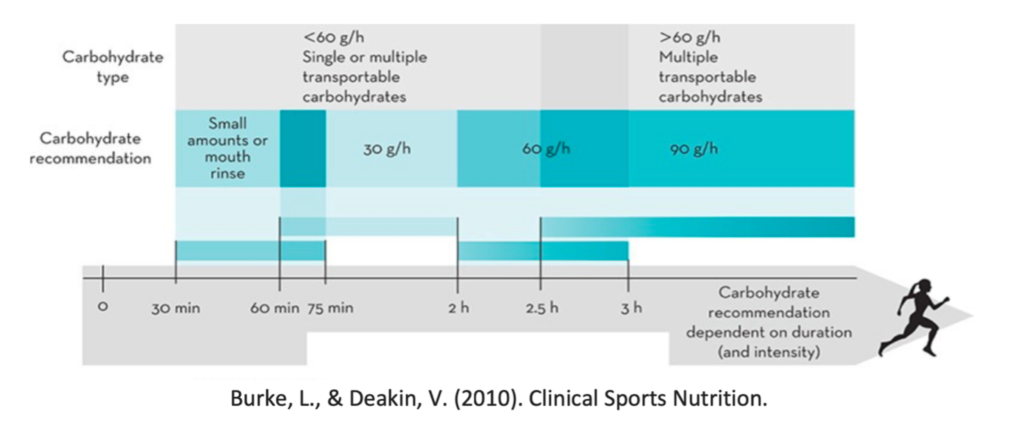
1–2.5 hours: 30–60 g carbs/hour
>2.5 hours: ~60-90 g carbs/hour
Use “multiple transportable carbs” when intake gets high
To push above ~60 g/h more comfortably, use glucose + fructose (different gut transporters). A 1:0.8 glucose:fructose ratio is highlighted as a sweet spot for high oxidation and fewer GI issues.
Our partners at Nduranz have a great fuelling calculator based on duration, intensity , body weight and environment. Check it out here…
Fuelling by session type (simple rules)
Easy / endurance rides
Goal: finish the session feeling steady, not “quietly cooked.”
0-60min easy: you may not need anything at all during this, but don’t start depleted.
≤75–90 min easy: you may not need much during, but don’t start depleted.
>90 min easy: add carbs to reduce fatigue cost and improve quality later in the week (especially if you train again soon).
Tip: 30–60 g/h is often enough for truly easy work; scale up if it stops being easy.
Interval days (VO₂, anaerobic, race-pace)
Goal: hit targets, repeat efforts, and recover faster.
Start fuelled (carb-forward meal beforehand).
During: typically 45–90 g/h, depending on duration and how hard the set is.
Tip: liquid + gels are easiest when breathing/working hard.
Long MTB rides / XCM-style sessions
Even though this is an XCO squad, long rides build the durability that wins XCO late-race.
>2.5 hours: aim toward ~60-90 g/h if intensity is moderate+ and you’re practicing race fuelling.
Race-day fuelling (XCO)
General physiology depicts that as the intensity increases we rely much more on greater contribution from carbohydrates (muscle glycogen). As we know XC racing is full of intermittent spikes above critical power (or FTP) and has a greater reliance on high intensity aerobic (oxidative) and anaerobic (Pcr, glycolysis) contributions to energy production. This means that we should be starting the race in a sufficient state of glycogen AND that those resources may rapidly diminish in race profiles such as XC.
Increase carbohydrate intake if your race is >90 minutes
- 10–12 g carbs/kg to personal preference in the 24–36 hours pre-race (fast-digesting, low-fiber, lower fat).
Race Day/Morning
Keep it simple and low-fiber/low-fat.
If you’re eating 2–4 hours before, make it predominantly and familiar foods that work for you.
During the race
Because technical sections block feeding opportunities:
Front-load early: start taking carbs from the first 10–15 minutes (or a gel on the start line).
Use gels/chews/drink mix, not “real food” (less chewing, less gut bounce).
Build a plan around laps (e.g., “every lap: 1 gel” + bottle targets) so you don’t rely on feel.
Hydration
Hydration can impact performance in many differnt ways – blood flow, temperature control, glycogen use, and GI tolerance, not just avoiding cramps (which is up for debate). Thirst is often a very useful driver of understanding hydration levels whilst exercising in low to moderate climate and will vary from individual to individual, However, here are some good guidelines to start from and adjust based on your own feedback and experience.
Simple starting guidelines
Cold: ~250 ml/h
Temperate: ~500 ml/h
Hot: ~750 ml/h
You can get a better idea by calculating your sweat rate (in the appropriate environment) by weighing yourself before and after exercise, minus the drink you consumed. However, even if you know that you dont need to try and replace that amount every hour. A guide is to target is 50% to 75% of your sweat rate, as many people absorb roughly 400–800 ml/h (subject to individual variability, practice and tolerance ).
ACSM guidance commonly frames the goal as avoiding <2% body mass loss during exercise but other research suggests a greater body mass loss towards the end of a race or event.
References
Burke, Louise & Deakin, Vicki. 2015, Clinical sports nutrition / Louise Burke, Vicki Deakin. McGraw-Hill Education (Australia) Pty Ltd North Ryde NSW
Podlogar T, Grmek B, Pungerčar L, Cirnski S, Goršek Šparovec T, Rowlands DS. No Performance Effects of Altered Carbohydrate Distribution During Intense Cycling. Int J Sport Nutr Exerc Metab. 2025;36(2):65-75. Published 2025 Dec 15. doi:10.1123/ijsnem.2025-0059